Fee Download Complete Guide to Prescription & Nonprescription Drugs 2016-2017, by H. Winter Griffith
It will not take more time to obtain this Complete Guide To Prescription & Nonprescription Drugs 2016-2017, By H. Winter Griffith It will not take more cash to publish this publication Complete Guide To Prescription & Nonprescription Drugs 2016-2017, By H. Winter Griffith Nowadays, individuals have actually been so clever to use the technology. Why don't you utilize your device or other device to save this downloaded and install soft documents e-book Complete Guide To Prescription & Nonprescription Drugs 2016-2017, By H. Winter Griffith By doing this will allow you to consistently be gone along with by this book Complete Guide To Prescription & Nonprescription Drugs 2016-2017, By H. Winter Griffith Obviously, it will be the most effective good friend if you review this e-book Complete Guide To Prescription & Nonprescription Drugs 2016-2017, By H. Winter Griffith until completed.
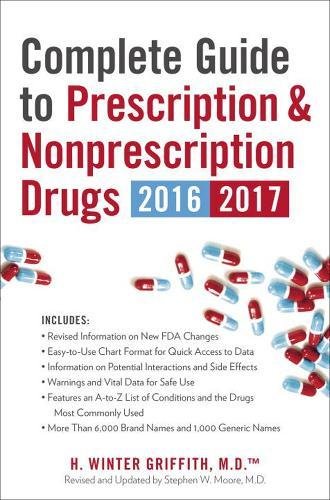
Complete Guide to Prescription & Nonprescription Drugs 2016-2017, by H. Winter Griffith

Fee Download Complete Guide to Prescription & Nonprescription Drugs 2016-2017, by H. Winter Griffith
Complete Guide To Prescription & Nonprescription Drugs 2016-2017, By H. Winter Griffith. It is the moment to enhance and also refresh your skill, understanding and also encounter included some home entertainment for you after long period of time with monotone points. Operating in the workplace, visiting examine, picking up from examination and also even more activities could be finished and also you should start brand-new things. If you feel so worn down, why don't you attempt brand-new point? An extremely easy thing? Reviewing Complete Guide To Prescription & Nonprescription Drugs 2016-2017, By H. Winter Griffith is what we provide to you will certainly know. And also guide with the title Complete Guide To Prescription & Nonprescription Drugs 2016-2017, By H. Winter Griffith is the reference now.
This letter might not affect you to be smarter, however guide Complete Guide To Prescription & Nonprescription Drugs 2016-2017, By H. Winter Griffith that we provide will certainly stimulate you to be smarter. Yeah, at the very least you'll understand more than others which do not. This is what called as the high quality life improvisation. Why needs to this Complete Guide To Prescription & Nonprescription Drugs 2016-2017, By H. Winter Griffith It's considering that this is your preferred motif to read. If you like this Complete Guide To Prescription & Nonprescription Drugs 2016-2017, By H. Winter Griffith theme about, why don't you read the book Complete Guide To Prescription & Nonprescription Drugs 2016-2017, By H. Winter Griffith to improve your discussion?
Today book Complete Guide To Prescription & Nonprescription Drugs 2016-2017, By H. Winter Griffith we provide right here is not type of usual book. You recognize, checking out currently does not mean to manage the published book Complete Guide To Prescription & Nonprescription Drugs 2016-2017, By H. Winter Griffith in your hand. You could obtain the soft documents of Complete Guide To Prescription & Nonprescription Drugs 2016-2017, By H. Winter Griffith in your gadget. Well, we imply that the book that we proffer is the soft data of the book Complete Guide To Prescription & Nonprescription Drugs 2016-2017, By H. Winter Griffith The material and all things are exact same. The difference is just the forms of guide Complete Guide To Prescription & Nonprescription Drugs 2016-2017, By H. Winter Griffith, whereas, this problem will specifically be profitable.
We discuss you also the means to obtain this book Complete Guide To Prescription & Nonprescription Drugs 2016-2017, By H. Winter Griffith without visiting guide store. You can continuously go to the link that we give as well as all set to download and install Complete Guide To Prescription & Nonprescription Drugs 2016-2017, By H. Winter Griffith When lots of people are busy to seek fro in the book establishment, you are quite simple to download and install the Complete Guide To Prescription & Nonprescription Drugs 2016-2017, By H. Winter Griffith right here. So, exactly what else you will opt for? Take the inspiration right here! It is not only offering the appropriate book Complete Guide To Prescription & Nonprescription Drugs 2016-2017, By H. Winter Griffith however also the right book collections. Here we constantly give you the very best as well as most convenient method.
The classic guide to all major prescription and nonprescription drugs, featuring revised, up-to-date FDA information and an A–Z list of illnesses for easy reference. Includes coverage of dosage and length of time before a drug takes effect; side effects; special precautions; interactions with other food and drugs; standards for use by different age groups; and more.
- Sales Rank: #32467 in Books
- Published on: 2015-11-03
- Released on: 2015-11-03
- Original language: English
- Number of items: 1
- Dimensions: 9.08" h x 1.80" w x 5.94" l, 2.25 pounds
- Binding: Paperback
- 1120 pages
Review
“Outstanding reference source.”
--American Library Association
“One of the simplest and most thorough guides ever put together on the subject.”
--United Press International
“Comprehensive, easy-to-use, and informative.”
--Los Angeles Times
About the Author
H. Winter Griffith, M.D., spent more than thirty years in private practice, university teaching, and hospital administration. Griffith wrote many books, including Complete Guide to Symptoms, Illness & Surgery; Complete Guide to Pediatric Symptoms, Illness & Medications; Complete Guide to Sports Injuries; and Complete Guide to Symptoms, Illness & Surgery for People Over 50.
Stephen Moore, M.D., is a family physician in Tucson, Arizona.
Excerpt. © Reprinted by permission. All rights reserved.
What is in This Book
The purpose of this book is to give you information about the most widely used drugs (prescription and nonprescription). The information is derived from many authoritative sources and represents the consensus of many experts. Every effort has been made to ensure accuracy and completeness. However, because drug information is constantly changing, you should always talk to your doctor or pharmacist if you have any questions or concerns.
The information applies to generic drugs in both the United States and Canada. Generic names do not vary in these countries, but brand names do. Each year, new drug charts are added and existing charts are updated when appropriate. For the most part, drugs that are injected by a medical professional, used mainly in a hospital (or medical clinic) or have rare usage are not included.
A drug cannot “cure.” It aids the body’s natural defenses to promote recovery. Likewise, a manufacturer or doctor cannot guarantee a drug will help every person. The complexity of the human body, individual responses in different people and in the same person under different circumstances, past and present health, age and gender impact how well a drug works.
All effective drugs produce desirable changes in the body, but can also cause undesirable adverse reactions or side effects. Before you decide whether to take a drug, you or your doctor must decide, “Will the benefits outweigh the risks?”
In the United States, it is the responsibility of the Food and Drug Administration (FDA) to ensure that drugs are safe and effective. For more information, you may contact the FDA at 1-888-INFO-FDA or visit the website: www.fda.gov.
Your Role
Learn the generic names and brand names of all your medicines. For example, acetaminophen is the generic name for the brand Tylenol. Write them down to help you remember. If a drug is a combination, learn the names of its generic ingredients.
Filling a Prescription
Once a prescription is written you may purchase the medication from various sources. Pharmacies are usually located in a drug or grocery store. You may need to consider your options: Does your health insurance limit where prescriptions can be filled? Is the location convenient? Does the pharmacy maintain patient records and are the employees helpful and willing to answer drug related questions?
Insurance companies or an HMO (Health Maintenance Organization) may specify certain pharmacies. Some insurance companies have chosen a mail-order pharmacy. Normally a prescription is sent to the mail-order pharmacy or phoned in by the physician. Mail order is best used for maintenance (long-term medications). Short-term medications such as antibiotics should be purchased at a local pharmacy.
Once a pharmacy has been chosen it is best to stay with that one so an accurate drug history can be maintained. The pharmacist can more easily check for drug interactions that may be potentially harmful to the patient or decrease the efficacy of one or more of the medications.
You can phone the pharmacy for a refill. Provide the prescription number, name of medication, and name of the patient.
Taking A Drug
Read the instructions provided with the drug and follow all directions for taking or using it.
Never take medicine in the dark! Recheck the label before each use. You could be taking the wrong drug!
Tell your doctor about any unexpected new symptoms you have while taking or using a drug. You may need to change drugs or have a dose adjustment.
Storage
Keep all medicines out of children’s reach and in childproof containers. Store drugs in a cool, dry place, such as a kitchen cabinet or bedroom. Avoid medicine cabinets in bathrooms. They get too moist and warm at times.
Keep medicine in its original container, tightly closed. Don’t remove the label! If directions call for refrigeration, keep the medicine cool, but don’t freeze it.
Discarding
Don’t save leftover medicine to use later. Discard it on or before the expiration date shown on the container. Dispose safely to protect children and pets. See here.
Alertness
Many of the medicines used to treat disorders may alter your alertness. If you drive, work around machinery, or must avoid sedation, discuss the problem with your doctor; usually there are ways (e.g., the time of day you take the medicine) to manage the problem.
Alcohol & Medications
Alcohol and drugs of abuse defeat the purpose of many medications. For example, alcohol causes depression; if you drink and are depressed, antidepressants will not relieve the depression. If you have a problem with drinking or drugs, discuss it with your doctor. There are ways to help.
Learn About Drugs
Study the information in this book’s charts regarding your medications. Read each chart completely. Because of space limitations, most information that fits more than one category appears only once. Any time you are prescribed a new medication, read the information on the chart for that drug, then take the time to review the charts on other medications you already take. Read any instruction sheets or printed warnings provided by your doctor or pharmacist.
Drug Advertising
Ads can cause confusion. Be sure and get sufficient information about any drug you think may help you. Ask your doctor or pharmacist.
Be Safe! Tell Your Doctor
Some suggestions for wise drug use apply to all drugs. Always give your doctor, dentist, or healthcare provider complete information about the drugs and supplements you take, including your medical history, your medical plans and your progress while under medication.
Medical History
Tell the important facts of your medical history including illness and previous experience with drugs. Include allergic or adverse reactions you have had to any medicine or other substance in the past. Describe the allergic symptoms you have, such as hay fever, asthma, eye watering and itching, throat irritation and reactions to food. People who have allergies to common substances are more likely to develop drug allergies.
List all drugs you take. Don’t forget vitamin and mineral supplements; skin, rectal or vaginal medicines; eyedrops and eardrops; antacids; antihistamines; cold and cough remedies; inhalants and nasal sprays; aspirin, aspirin combinations or other pain relievers; motion sickness remedies; weight-loss aids; salt and sugar substitutes; caffeine; oral contraceptives; sleeping pills; laxatives; “tonics” or herbal preparations.
Future Medical Plans
Discuss plans for elective surgery (including dental surgery), pregnancy and breastfeeding. These conditions may require discontinuing or modifying the dosages of medicines you may be taking.
Questions
Don’t hesitate to ask questions about a drug. Your doctor or pharmacist will be able to provide helpful information if they are familiar with you and your medical history.
Guide to Drug Charts
The drug information in this book is organized in condensed, easy-to-read charts. Each drug is described in a two-page format, as shown in the sample chart below and opposite. Charts are arranged alphabetically by drug generic names, such as ACETAMINOPHEN or by drug class name, such as ANTIHISTAMINES.
A generic name is the official chemical name for a drug. A brand name is a drug manufacturer’s registered trademark for a generic drug. Brand names listed on the charts include those from the United States and Canada. A generic drug may have one, a few, or many brand names.
To find information about a generic drug, look it up in the index. To learn about a brand name, check the index, where each brand name is followed by the name(s) of its generic ingredients and their chart page number(s).
The chart design is the same for every drug. When you are familiar with the chart, you can quickly find information you want to know about a drug.
On the next few pages, each of the numbered chart sections below is explained. This information will guide you in reading and understanding the charts that begin here.
1—Generic or Class Name
Each drug chart is titled by generic name or by the name of the drug class, such as DIGITALIS PREPARATIONS.
All drugs have a generic name. These generic names are the same worldwide. Sometimes a drug is known by more than one generic name. The chart is titled by the most common one. Less common generic names appear in parentheses. For example, vitamin C is also known as ascorbic acid. Its chart title is VITAMIN C (Ascorbic Acid). The index will include both names.
Your drug container may show a generic name, a brand name or both. If you have only a brand name, use the index to find the drug’s generic name(s) and chart page number(s).
If your drug container shows no name, ask your doctor or pharmacist for the name and write it on the container.
2—Brand Names
A brand name is usually shorter and easier to remember than the generic name. The brand name is selected by the drug manufacturer
The brand names listed for each generic drug in this book do not include all brands available in the United States and Canada. The more common names are listed. New brands appear on the market, and brands are sometimes removed from the market. No list can reflect every change. In the instances in which the drug chart is titled with a drug class name instead of a generic name, the generic and brand names all appear under the heading GENERIC AND BRAND NAMES. The GENERIC NAMES are in capital letters and the BRAND NAMES are in lower-case letters.
Inclusion of a brand name does not imply recommendation or endorsement. Exclusion does not imply that a missing brand name is less effective or less safe than the ones listed. Some drug charts have too many generic and brand names to list on the page. A complete list is on the page indicated on the chart.
Lists of brand names don’t differentiate between prescription and nonprescription drugs. The active ingredients are the same.
If you buy a nonprescription drug, look for generic names of the active ingredients on the container. Common nonprescription drugs are described in this book under their generic components. Many are also listed in the index by brand name.
Most drugs contain inert, or inactive, ingredients that are fillers, dyes or solvents for the active ingredients. Manufacturers choose inert ingredients that preserve the drug without interfering with the action of the active ingredients.
Inert substances are listed on labels of nonprescription drugs. They do not appear on prescription drugs. Your pharmacist can tell you all active and inert ingredients in a prescription drug.
A tablet, capsule or liquid may contain small amounts of sodium, sugar or potassium. If you are on a diet that severely restricts any of these, ask your pharmacist or doctor to suggest another form.
Some liquid medications contain alcohol. Avoid them if you are susceptible to the adverse effects of alcohol consumption.
BASIC INFORMATION
3—Habit Forming?
Yes—means the drug is capable of leading to physical and/or psychological dependence.
Physical dependence includes tolerance (requiring larger dosages or repeated use) and withdrawal symptoms (mental and physical) when it is stopped.
Psychological dependence involves repeated use of a drug to bring about effects that are pleasurable or satisfying, or it reduces undesirable feelings.
4—Prescription Needed?
Yes—means a doctor must prescribe the drug for you. “No” means you can buy the drug without prescription. Sometimes low strengths of a drug are available without prescription, while higher strengths require prescription.
The information about the drug applies whether it requires prescription or not. If the generic ingredients are the same, nonprescription drugs have the same dangers, warnings, precautions and interactions as prescription drugs. A nonprescription (over-the-counter) drug has dosing and other instructions printed on the container label. Always read them carefully before you take the drug. The information and warnings on containers for nonprescription drugs may not be as complete as the information in this book. Check both sources.
5—Available as Generic?
Some drugs have patent restrictions that protect the manufacturer or distributor of that drug. These drugs may be purchased only by a specific brand name.
Drugs purchased by generic name are usually less expensive than brand names. Once the patent expires, other drug companies can sell that particular drug. They will choose their own brand name.
Some states allow pharmacists to fill a prescription by brand name or generic name (if available). This allows patients to buy the least expensive form of a drug.
A doctor may specify a brand name because he or she trusts a known source more than an unknown manufacturer of generic drugs. You and your doctor should decide together whether you should buy a medicine by generic name or brand name.
Generic drugs manufactured in other countries are not subject to regulation by the U.S. Food and Drug Administration. All drugs manufactured in the United States are subject to regulation.
6—Drug Class
Drugs that possess similar chemical structures or similar therapeutic effects are grouped into classes. Most drugs within a class produce similar benefits, side effects, adverse reactions and interactions with other drugs and substances. For example, all the generic drugs in the narcotic drug class will have similar effects on the body.
Some information on the charts applies to all drugs in a class. The index lists the classes (such as narcotics) and lists the drug charts in that class.
Names for classes of drugs are not standardized; class names listed in other references may vary from the class names in this book.
7— Uses
This section lists the disease or disorder for which a drug is prescribed.
Most uses listed are approved by the U.S. Food and Drug Administration. Some uses are listed if experiments and clinical trials indicate effectiveness and safety. Still, other uses are included that may not be officially sanctioned, but for which doctors may prescribe the drug.
The use for which your doctor prescribes the drug may not appear. You and your doctor should discuss the reason for any prescription medicine you take. You alone will probably decide whether to take a nonprescription drug. This section may help you make a wise decision.
DOSAGE & USAGE INFORMATION
8—How To Take
Drugs are available in forms of tablets, capsules, chewables, liquids, powders, thin film, specialty tablets, suppositories, injections, transdermal patches (used on the skin), aerosol inhalants and topical forms such as drops, sprays, creams, gels, oint-ments and lotions. This section gives brief instructions for taking or using each form.
The information here supplements the drug label information. If your doctor’s instructions differ from these suggestions, follow your doctor’s instructions.
Instructions are left out for how much to take. Dose amounts can’t be generalized. Dosages of prescription drugs must be individualized for you by your doctor. Be sure the dosage instructions are on the label. Advice to “take as directed” is not helpful if you forget the doctor’s instructions or didn’t understand them. Nonprescription drugs have instructions on the labels regarding how much to take.
9—When To Take
Dose schedules vary for medicines and for patients.
Drugs prescribed on a schedule should usually be taken at approximately the same times each day. Some must be taken at regular intervals to maintain a steady level of the drug in the body. If the schedule is a problem for you, consult your doctor.
Instructions to take on an empty stomach mean the drug is absorbed best in the body this way. Some drugs must be taken with food because they irritate the stomach.
Instructions for other dose schedules are usually on the label. Variations in standard dose schedules may apply because some medicines interact with others if you take them at the same time.
Most helpful customer reviews
15 of 16 people found the following review helpful.
New Biological Drugs, (in depth discussions of each drug) are not included in the Book. Otherwise, excellent resource
By S. Wendenland
I have had an Old 2005 copy of "Complete Guide to Prescription and Non Prescription Drugs" in my home for years. It has been an invaluable guide. I have Rheumatoid Arthritis, and some of the Meds I take are scary indeed. That Medical Guide was a good place to go to find out what my meds interacted with, what were the signs of a bad reaction.....just good advice that helped me avoid any issues.
That said.......medical treatment for R.A. has moved into the new medical field of biological drugs. They are miracles, but the side effects can be dangerous. They do lower your immune system's ability to fight disease, but the relief they give to pain, and the mobility they restore are also wonderful. The New Issue does not discuss biological drugs. There is a brief discussion, but the individual types are not broken down. Until biological drugs, and other new medical advances are added to the book, I would not recommend buying. I feel it is a matter of time until that is done, and then.............It is a most helpful book to have in your home.
6 of 6 people found the following review helpful.
Handy to have
By Terry L. Pollock
Much improved from my old "pill book". I take a lot of Rx meds unfortunately, and I like to be informed about them. Doctors don't have enough time during an appointment to go through all the possible side-effects and other information regarding the medications that they prescribe, so a book like this is very handy to have.
15 of 16 people found the following review helpful.
I am a nursing student and needed a good drug book for my pharmacology and medical/surgical classes however
By Tristen
I am a nursing student and needed a good drug book for my pharmacology and medical/surgical classes however, the information in this book is poorly organized and the drugs are hard to find. I have seen other Nursing student drug books and they are much more organized and easy to ready and follow.
Complete Guide to Prescription & Nonprescription Drugs 2016-2017, by H. Winter Griffith PDF
Complete Guide to Prescription & Nonprescription Drugs 2016-2017, by H. Winter Griffith EPub
Complete Guide to Prescription & Nonprescription Drugs 2016-2017, by H. Winter Griffith Doc
Complete Guide to Prescription & Nonprescription Drugs 2016-2017, by H. Winter Griffith iBooks
Complete Guide to Prescription & Nonprescription Drugs 2016-2017, by H. Winter Griffith rtf
Complete Guide to Prescription & Nonprescription Drugs 2016-2017, by H. Winter Griffith Mobipocket
Complete Guide to Prescription & Nonprescription Drugs 2016-2017, by H. Winter Griffith Kindle

Tidak ada komentar:
Posting Komentar